


Abstract
Purple Urine Bag Syndrome (PUBS) is an uncommon clinical condition that is generally benign but rarely encountered by clinicians. It occurs due to the metabolism of tryptophan by intestinal bacteria, followed by hepatic conjugation. In the urine, bacterial sulfatase and phosphatase enzymes lead to the production of indigo and indirubin pigments, whose oxidation results in the characteristic purple discoloration.
We report the case of a 61-year-old female patient with known chronic obstructive pulmonary disease (COPD) and psoriasis. Due to inadequate oral enteral nutrition, a nutritional supplement was prescribed. Approximately seven hours after administration, purple discoloration of the urine bag was observed. Urine culture revealed growth of Proteus mirabilis, and the urine pH was 8.5. As the colony count was low, antibiotic therapy was not initiated. After discontinuation of the nutritional product, the urine color returned to normal.
Although PUBS is typically benign, catastrophic outcomes have been reported in delayed cases. Therefore, increasing awareness among healthcare professionals and ensuring early recognition and management are of vital importance.
Keywords: purple urine bag syndrome, urinary tract infection, proteus mirabilis, oral nutrition support
Introduction
Purple Urine Bag Syndrome (PUBS) is a rare condition encountered by clinicians and has a distinctive visual appearance. Although it may initially cause concern among patients and their relatives, early recognition and appropriate management are important for preventing complications. The pathogenesis involves urinary tract infections caused by bacteria such as Proteus mirabilis, Escherichia coli, Pseudomonas aeruginosa, Klebsiella pneumoniae, Morganella morganii, Citrobacter spp., Providencia spp., methicillin-resistant Staphylococcus aureus, Group B Streptococci, and Enterococcus spp. Historically, the condition was first described in 1812 by King George III’s physicians and was later reported in the literature by Barlow in 1978 (1). Barlow noted that the discoloration was associated with urinary tract infection and was observed in patients using plastic urine bags. He also suggested that the color change resulted from the metabolism of tryptophan by bacteria (2).
Tryptophan is converted into indole by intestinal flora bacteria and transported to the liver via the portal circulation, where it is metabolized into indoxyl sulfate. In the urine, bacterial sulfatase and phosphatase enzymes convert indoxyl sulfate into indoxyl. Under alkaline conditions, indoxyl undergoes oxidation, producing indigo (blue) and indirubin (red) pigments. The combination of these pigments, particularly in polyvinyl chloride (PVC) urine bags, results in the characteristic purple discoloration of the urine (3). Risk factors associated with the syndrome include advanced age, female sex, bedridden status, long-term urinary catheterization, chronic kidney disease, constipation, and diets rich in tryptophan (1).
Case
A 61-year-old woman with a history of psoriasis and chronic obstructive pulmonary disease (COPD) for approximately 30 years was admitted to the emergency department with progressive dyspnea. She had CPAP treatment 20 hours daily at nursing home. She was admitted to the intensive care unit (ICU) following initial management of a COPD exacerbation in the emergency department. Her vital signs were stable, and she was oriented and cooperated. The patient’s history revealed that she had been receiving CPAP therapy for a long time and had become bedridden recently due to prolonged CPAP sessions. She had no fever upon admission and infection parameters were normal. The patient did not have a routine urinary catheter in the nursing home. A culture from the urinary catheter inserted in the emergency department showed growth of Proteus mirabilis; however, antibiotics were not initiated as this was considered a colonization by infectious disease specialists (4). There were no clinical findings for urinary tract infection.
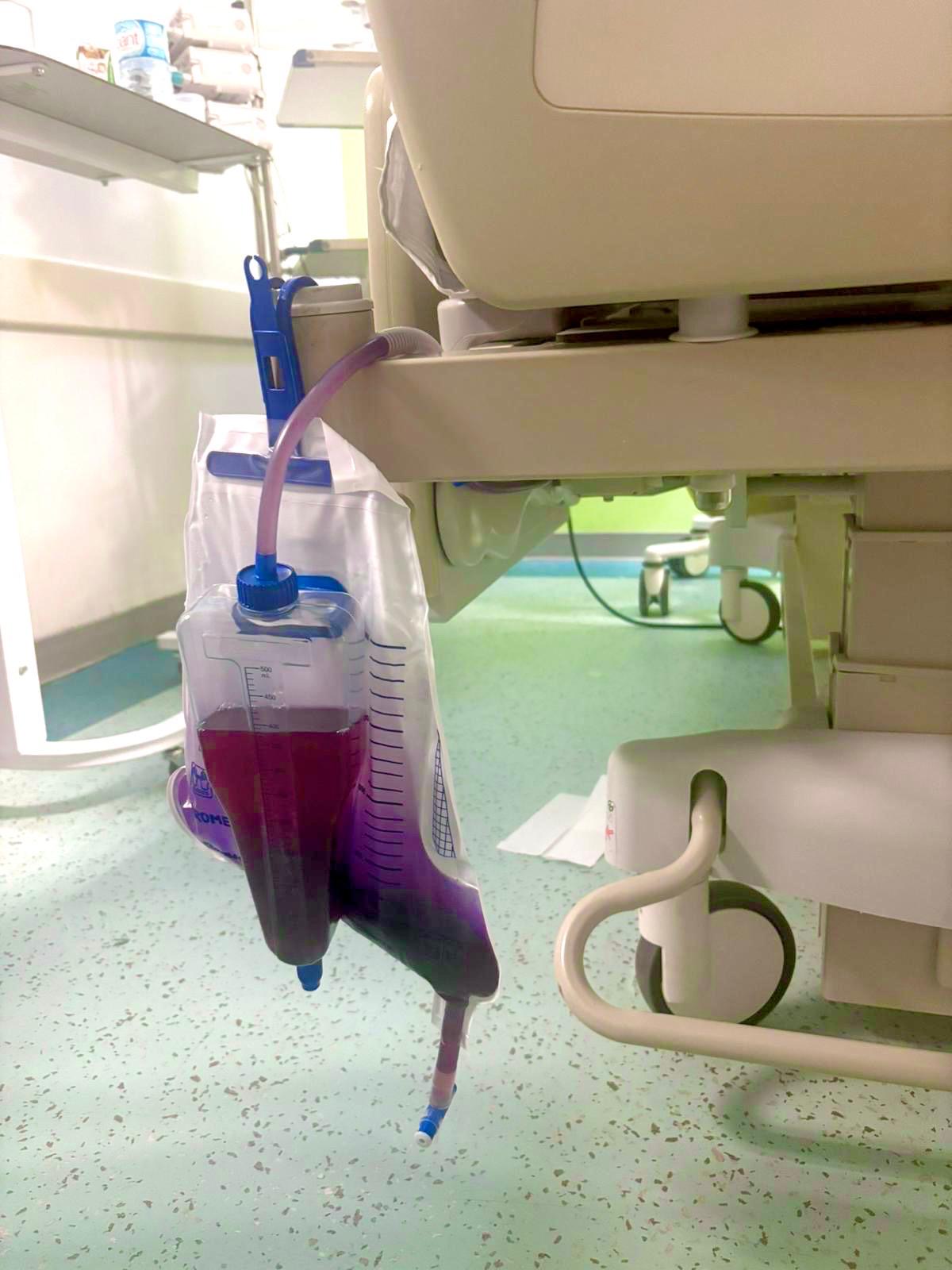
It was learned that the patient had not had a bowel movement for 4 days and was not receiving any opioid treatment. The patient’s eating habits have not changed recently, but it was found to be malnourished due to prolonged CPAP use. Due to malnutrition, the patient was started on Nutricia Fortimel Forticare (Nutricia N.V, Zoetermeer, Netherlands) oral nutritional supplement (fruit forest flavored), which is low in volume and high in protein. Approximately 7 hours after taking the supplement, the patient’s urine turned purple and a foul odor emanated from the urine bag (Figure 1). The urine pH was 8.5. The catheter was changed, and a urine culture was taken again. Proteus mirabilis, growth was again detected in the urine culture, but antibiotic treatment was not initiated by the infectious diseases department. After discontinuing the nutritional supplement, the patient’s urine color gradually returned to normal. The patient was discharged after treatment for a COPD exacerbation.
Discussion
Although rare, PUBS should be considered, especially in patients with long-term catheterization, the elderly, and those with concomitant comorbidities. The presence of alkaline urine and tryptophan metabolites, combined with bacterial enzymes, facilitates pigment formation (5). In our case, risk factors included female gender, constipation, and being bedridden. Clinically, it is often benign and can be confused with hematuria. If a change in urine color is detected, a urine analysis should be performed, and if microorganisms are found, appropriate treatment should be initiated. If a change in bladder color is observed, the bladder and urinary catheter should be replaced (6). Antibiotic therapy is not routinely recommended. It is only recommended for patients with bacterial growth in urine cultures and systemic symptoms (7). In our case, because the urine culture showed a low number of colonies, the infectious diseases department did not deem it necessary to initiate antibiotic therapy. Permanent urinary catheters should not be left in place for extended periods to prevent the development of PUBS. The literature shows that in two patients with PUBS, antibiotic therapy was not initiated due to the absence of symptoms, and because catheter replacement was delayed, Fournier’s gangrene was reported in both cases after 5 days. Despite antibiotic therapy following debridement, both patients died (8). Since fatal cases have been reported in the literature, awareness of PUBS among healthcare professionals is critically important.
Drugs such as amitriptyline, ibuprofen, propofol, phenytoin, and K-dopa can also cause changes in urine color. In patients with constipation after consuming foods rich in tryptophan, such as bananas, oats, milk, cheese, bread, chicken, and turkey. Bacteria can cause indole formation from tryptophan (9). The indole formed can cause the formation of indoxyl sulfate in the liver. Indoxyl sulfate is broken down into indigo and indirubin by the bacterial sulfatase enzyme in the urinary system, resulting in a purple color in alkaline urine (10). Foods such as carrots, blackberries, and beets can also cause changes in urine color (11).
In our case, the patient’s urine color changed after receiving an oral nutritional supplement, and Proteus mirabilis growth was detected in the urine, making it impossible to determine the primary causative agent. The situation was communicated to the company representatives in our country, and it was learned that no feedback regarding any urine changes after using this product had been received previously. Because the product used by our patient was fruit-based, and despite the presence of growth in the urine culture, the colony count was low, and the patient had no systemic findings suggestive of urinary tract infection, we do not believe the urine change was entirely due to urinary tract infection. However, since PUBS has been shown in the literature to lead serious complications, including death, careful diagnosis and the possibility of infection should be kept in mind.
Conclusion
PUBS is a visually striking condition associated with urinary tract infections and catheterization; however, it is generally benign. When purple discoloration of the urine bag is observed, information regarding the patient’s recent dietary intake should be obtained, and risk factors should be taken into consideration during the diagnostic and therapeutic process. Early diagnosis and appropriate management play a key role in preventing complications. Increasing clinical awareness, particularly in elderly and catheterized patients, can help prevent unnecessary anxiety and inappropriate treatment approaches when purple urine discoloration is encountered.
Ethical approval
Written informed consent was obtained from the participant.
Author contribution
Study conception and design: NSA,data collection: NÖ; analysis and interpretation of results: AMV, SBA; draft manuscript preparation: OK, YG. The author(s) reviewed the results and approved the final version of the article.
Source of funding
The authors declare the study received no funding.
Conflict of interest
The authors declare that there is no conflict of interest.
References
- Khan F, Chaudhry MA, Qureshi N, Cowley B. Purple urine bag syndrome: an alarming hue? A brief review of the literature. Int J Nephrol. 2011;2011:419213. https://doi.org/10.4061/2011/419213
- Barlow GB, Dickson JAS. Purple urine bags. Lancet. 1978;311(8057):220-1.
- Kalsi DS, Ward J, Lee R, Handa A. Purple urine bag syndrome: a rare spot diagnosis. Dis Markers. 2017;2017:9131872. https://doi.org/10.1155/2017/9131872
- Saraireh M, Gharaibeh S, Araydah M, Al Sharie S, Haddad F, Alrababah A. Violet discoloration of urine: a case report and a literature review. Ann Med Surg (Lond). 2021;68:102570. https://doi.org/10.1016/j.amsu.2021.102570
- Hadano Y, Shimizu T, Takada S, Inoue T, Sorano S. An update on purple urine bag syndrome. Int J Gen Med. 2012;5:707-10. https://doi.org/10.2147/IJGM.S35320
- Neniwal VK, Swain S, Rulaniya SK, Hota D, Agarwal P, Yadav PK. Purple urine bag syndrome: an unusual manifestation of urinary tract infection, our experience at a tertiary care center. Curr Urol. 2023;17:125-9. https://doi.org/10.1097/CU9.0000000000000044
- Mahdi F, Larijani A. Purple urine bag syndrome: a unique clinical case and management considerations. BMC Nephrol. 2024;25:375. https://doi.org/10.1186/s12882-024-03708-6
- Tasi YM, Huang MS, Yang CJ, Yeh SM, Liu CC. Purple urine bag syndrome, not always a benign process. Am J Emerg Med. 2009;27:895-7. https://doi.org/10.1016/j.ajem.2009.01.030
- Popović MB, Medić DD, Velicki RS, Jovanović Galović AI. Purple urine bag syndrome in a home-dwelling elderly female with lumbar compression fracture: a case report. Healthcare (Basel). 2023;11:2251. https://doi.org/10.3390/healthcare11162251
- DeRon N, Legan C. Purple urine bag syndrome: a rare and surprising clinical presentation. Cureus. 2023;15:e33354. https://doi.org/10.7759/cureus.33354
- Sayın Kart J, Çevik B, Bombacı E, Saraçoglu KT. Purple bag urinary syndrome: a rare clinical condition. Bosphorus Med J. 2021;8(3):177-9. https://doi.org/10.14744/bmj.2021.18894
Copyright and license
Copyright © 2026 The Author(s). This is an open access article distributed under the Creative Commons Attribution License (CC BY), which permits unrestricted use, distribution, and reproduction in any medium or format, provided the original work is properly cited.