

Abstract
Objective: This study aimed to evaluate the use of bivalirudin as an alternative to conventional anticoagulant therapy with heparin in patients requiring venovenous extracorporeal membrane oxygenation (V-V ECMO) support for Acute Respiratory Distress Syndrome (ARDS), with a focus on dose titration, therapeutic range monitoring, complications, and clinical outcomes.
Materials and Methods: This retrospective case series included six patients who received V-V ECMO support and systemic anticoagulation with bivalirudin between August 2021 and April 2022 at Sakarya University Training and Research Hospital due to a diagnosis of ARDS. Activated clotting time (ACT), activated partial thromboplastin time (aPTT), daily bivalirudin infusion doses, ECMO-related complications, and clinical outcomes were retrospectively analyzed.
Results: Bivalirudin infusion doses ranged between 0.01 and 0.2 mg/kg/h across all patients. ACT values were maintained within the target range in all cases, while aPTT values remained below target in four patients. Hemorrhagic complications were observed in two patients, while thrombotic events occurred in another two. In one patient, bivalirudin infusion was discontinued due to the development of acute kidney injury. Of the six patients, two were discharged, while four died during follow-up.
Conclusion: Bivalirudin appears to be a safe and effective alternative anticoagulant agent for patients undergoing V-V ECMO. However, individualized and meticulous anticoagulation monitoring is essential, particularly in the context of renal dysfunction, the strengths and limitations of aPTT and ACT monitoring, and the delicate balance between hemorrhagic and thrombotic risks.
Keywords: Bivalirudin, ECMO, COVID-19, anticoagulation, aPTT, ACT, ARDS
Introduction
Today, veno-venous extracorporeal membrane oxygenation (V-V ECMO) is a treatment modality used in the management of Acute Respiratory Distress Syndrome (ARDS) due to many different causes and may be required in cases that do not respond to conventional mechanical ventilation.
During veno-venous extracorporeal membrane oxygenation (V-V ECMO), anticoagulation is necessary to reduce the risk of thrombosis and maintain ECMO circuit function. Since this treatment also carries a risk of bleeding, it requires careful management. In ARDS cases associated with COVID-19, achieving this balance is difficult because of the existing hypercoagulable state, which significantly increases the risk of both venous and arterial thromboembolic complications (1-3). Unfractionated heparin is generally used as the anticoagulant during ECMO because of its rapid onset of action, widespread availability, and reversibility with protamine (4,5). To date, unfractionated heparin (UFH) has been identified as the primary antithrombotic agent recommended in Extracorporeal Life Support Organization (ELSO) guidelines (2). However, heparin has inherent limitations, including susceptibility to persistent fluctuations in dose responsiveness and heparin-induced thrombocytopenia (HIT) (6). These potential problems associated with traditionally used unfractionated heparin (UFH), together with the goal of achieving better patient outcomes, have led to the need for alternative anticoagulation strategies in ECMO.
As an alternative anticoagulant in ECMO, bivalirudin, a direct thrombin inhibitor (DTI), has begun to be preferred because it provides predictable pharmacokinetics due to its organ-independent clearance and allows a balance between thrombosis and hemorrhage (7,8).
In this case series, we aimed to present the follow-up and treatment process of our patients who received veno-venous ECMO and were anticoagulated with bivalirudin.
Materials and methods
This retrospective case series included patients who received veno-venous ECMO support due to COVID-19-related ARDS at Sakarya University Training and Research Hospital between August 2021 and April 2022. Approval for the study was obtained from the Sakarya University Training and Research Hospital Non-Interventional Clinical Research Ethics Committee (No: 71522473-050.01.04-136950-156).
The patients’ age, sex, day of ECMO initiation, and laboratory values were recorded. During ECMO, hourly activated clotting time (ACT), activated partial thromboplastin time (aPTT) every 4 hours, and hourly bivalirudin dose values were recorded. Complications occurring during ECMO and intensive care unit and hospital outcomes were also recorded.
All patients received a bolus dose of heparin during ECMO cannulation, followed by initiation of a bivalirudin infusion. During ECMO, bivalirudin was initiated at 2.5 mcg/kg/min as recommended in the ECMO bivalirudin dosing protocol proposed by Netley et al.(9). According to the same protocol, the target aPTT was 50–70 seconds; however, because ACT values were considered more suitable for our hospital practice, we primarily targeted ACT values. Although there are differing opinions regarding the target ACT range, we determined the ACT target (for the i-STAT analyzer) to be between 160 and 200 seconds (10).
Complications developing during ECMO, daily mean bivalirudin dose, aPTT, and ACT levels were demonstrated graphically for each case.
Results
The data of six patients who received veno-venous ECMO support for ARDS and were anticoagulated with bivalirudin between August 2021 and April 2022 were included in the study. All cases were considered suitable for ECMO according to the recommendations in the ELSO guidelines (11).
Case 1
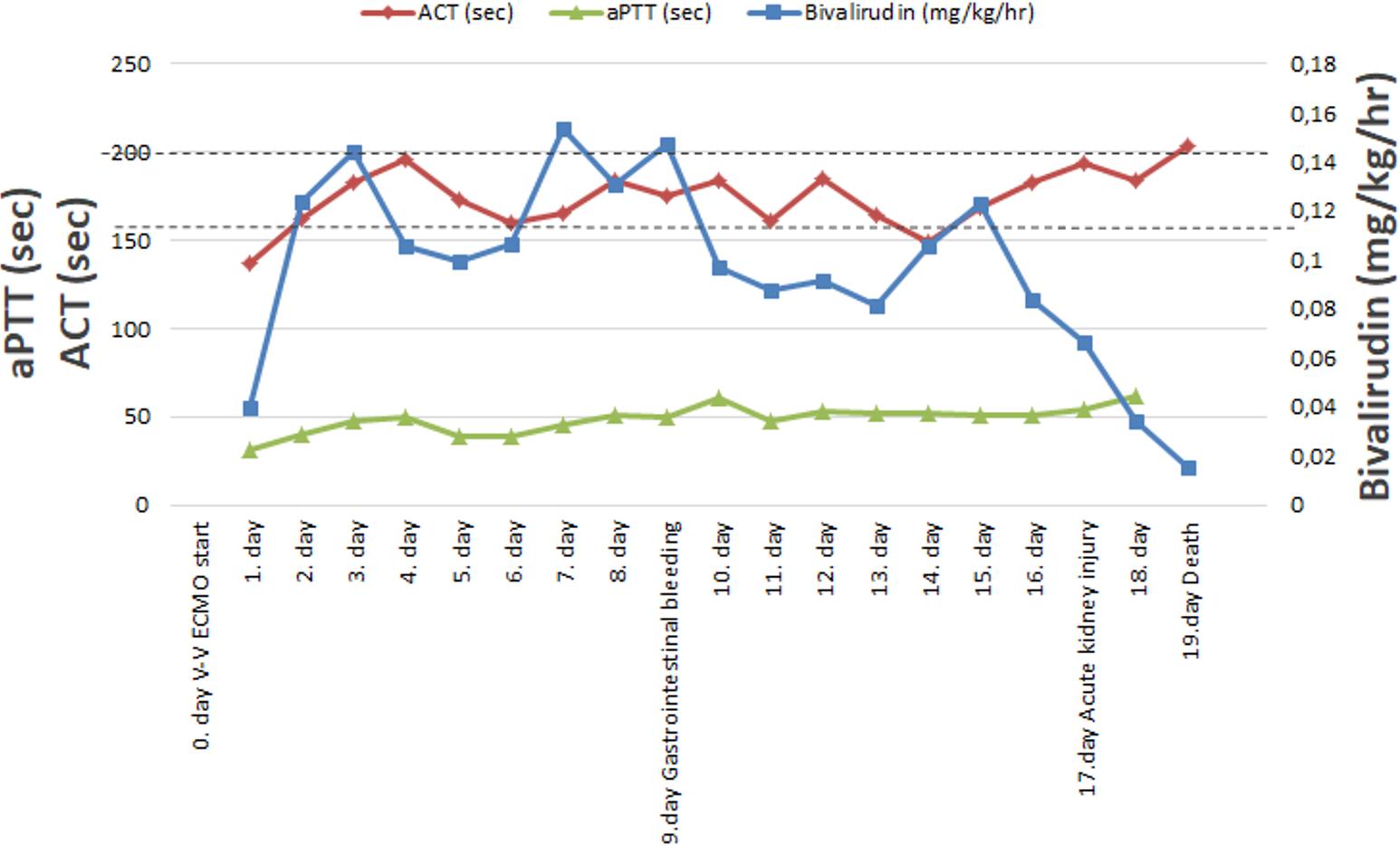
The first case was a 46-year-old male patient. The clinical events timeline of the case is shown in Figure 1. The daily mean bivalirudin dose administered during ECMO ranged between 0.015 mg/kg/h and 0.15 mg/kg/h. ACT was maintained within the target range, with a mean value of 174 seconds. The mean aPTT was 49 seconds, which was below the target range. On day 9 of ECMO, while ACT and aPTT values were within the target ranges, the patient developed gastrointestinal bleeding. Following the development of acute kidney injury on day 17, the bivalirudin requirement necessary to maintain target ACT and aPTT values decreased to 0.015 mg/kg/h. During follow-up, the patient developed a need for renal replacement therapy and died on day 19 of ECMO due to multiorgan failure.
Case 2
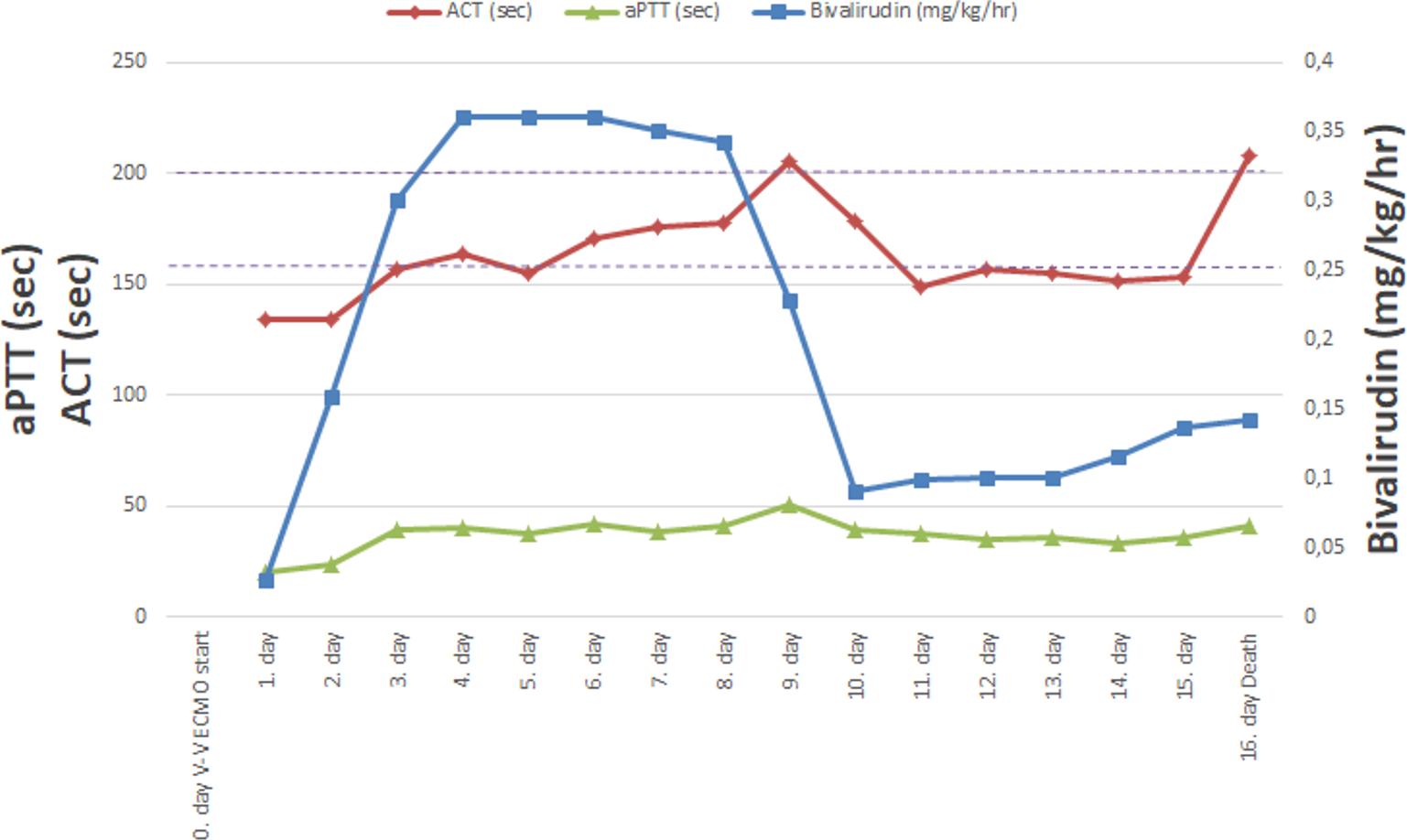
The second case was a 31-year-old female patient. The clinical events timeline of the case is shown in Figure 2. The mean bivalirudin dose administered during ECMO varied between 0.027 mg/kg/h and 0.36 mg/kg/h. ACT was maintained within the target range, with a mean value of 164 seconds. The mean aPTT was 37 seconds, which was below the target range. No bleeding or thrombosis was detected. The patient died on day 16 of ECMO due to worsening hypoxemia.
Case 3
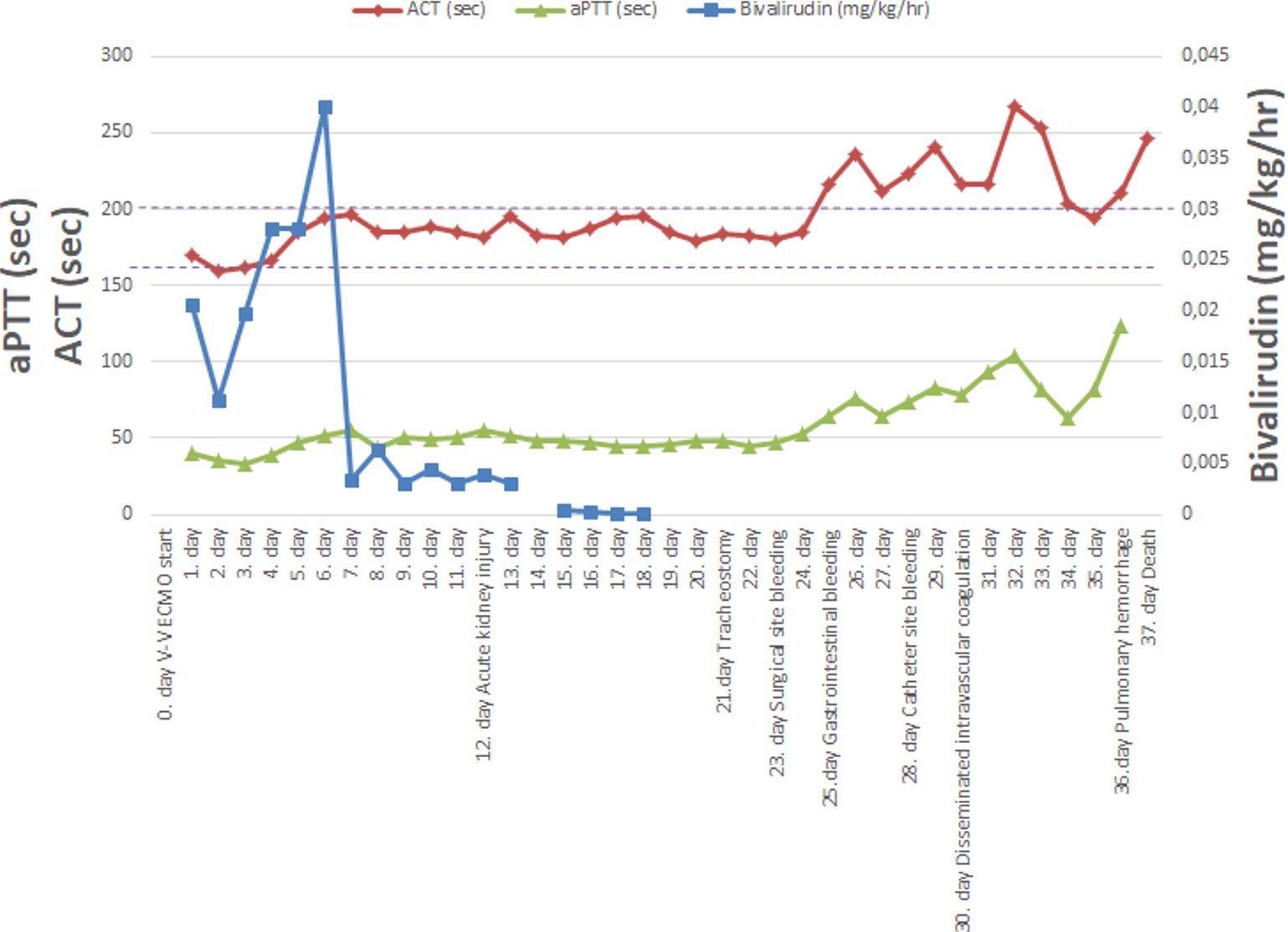
The third case was a 42-year-old male patient. The clinical events timeline of the case is shown in Figure 3. During the first 11 days of ECMO, the daily mean bivalirudin dose was 0.015 mg/kg/h, and ACT remained within the target range. On day 12, following the development of acute kidney injury (KDIGO stage 2, GFR 30–50 mL/min/1.73 m²), the bivalirudin dose was reduced to as low as 0.0001 mg/kg/h. On day 18, the bivalirudin infusion was discontinued because ACT values were at the upper limit of the target range. After ACT values returned to the target range, a percutaneous tracheostomy was performed on day 21. Subsequently, acute kidney injury progressed, and the patient required renal replacement therapy. Since ACT and aPTT values continued to remain above the target range, bivalirudin infusion was not restarted. The patient developed bleeding around the tracheostomy site on day 23, gastrointestinal bleeding on day 25, and catheter-site bleeding on day 28. Disseminated intravascular coagulation (DIC) developed on day 30. The patient developed pulmonary hemorrhage on day 36 and died on day 37.
Case 4
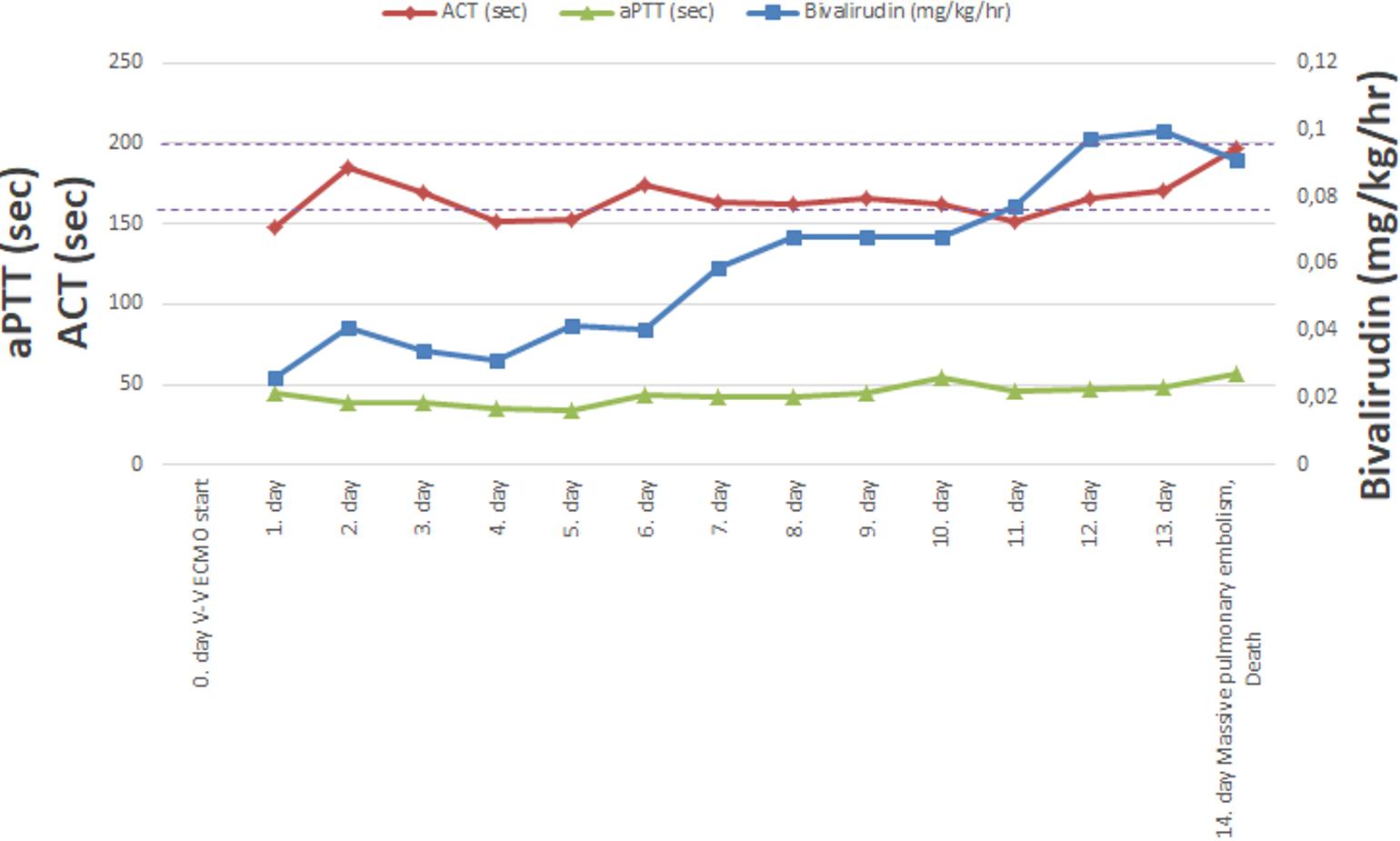
The fourth case was a 33-year-old female patient. The clinical events timeline of the case is shown in Figure 4. The mean bivalirudin dose administered during ECMO varied between 0.025 mg/kg/h and 0.099 mg/kg/h. Throughout ECMO, ACT was maintained within the target range, with a mean value of 166 seconds. The mean aPTT was 44 seconds, which was below the target range. However, despite ACT and aPTT values being within the target ranges, the patient developed a massive pulmonary embolism on day 14 and died.
Case 5
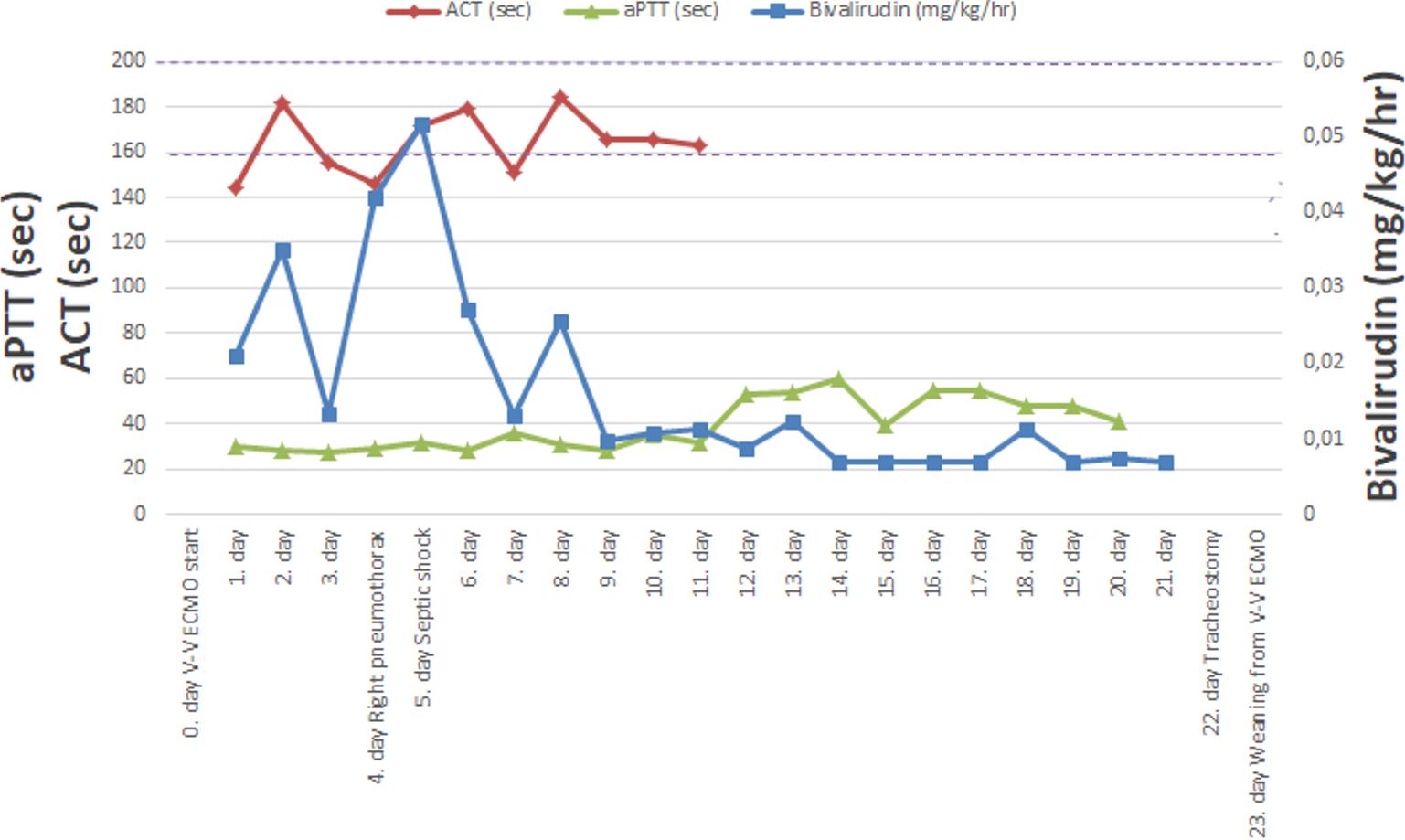
The fifth case was a 50-year-old male patient. The clinical events timeline of the case is shown in Figure 5. The daily mean bivalirudin dose administered during ECMO varied between 0.0068 mg/kg/h and 0.051 mg/kg/h. During the first 11 days of ECMO follow-up, ACT was maintained within the target range, with a mean value of 164 seconds. After day 12, anticoagulation monitoring was performed only with aPTT because ACT cartridges were unavailable; from day 12 onward, the mean aPTT was 50 seconds and remained within the target range. On day 21, the bivalirudin infusion was discontinued, and a percutaneous tracheostomy was performed on day 22. ECMO support was terminated on day 23. An ischemic cerebrovascular event developed on day 28. Subsequently, left-sided pneumothorax developed on day 29, sepsis on day 30, and right-sided pneumothorax on day 31. During follow-up, mechanical ventilatory support was discontinued on day 45, the tracheostomy was closed on day 47, and the patient was discharged home on day 61.
Case 6
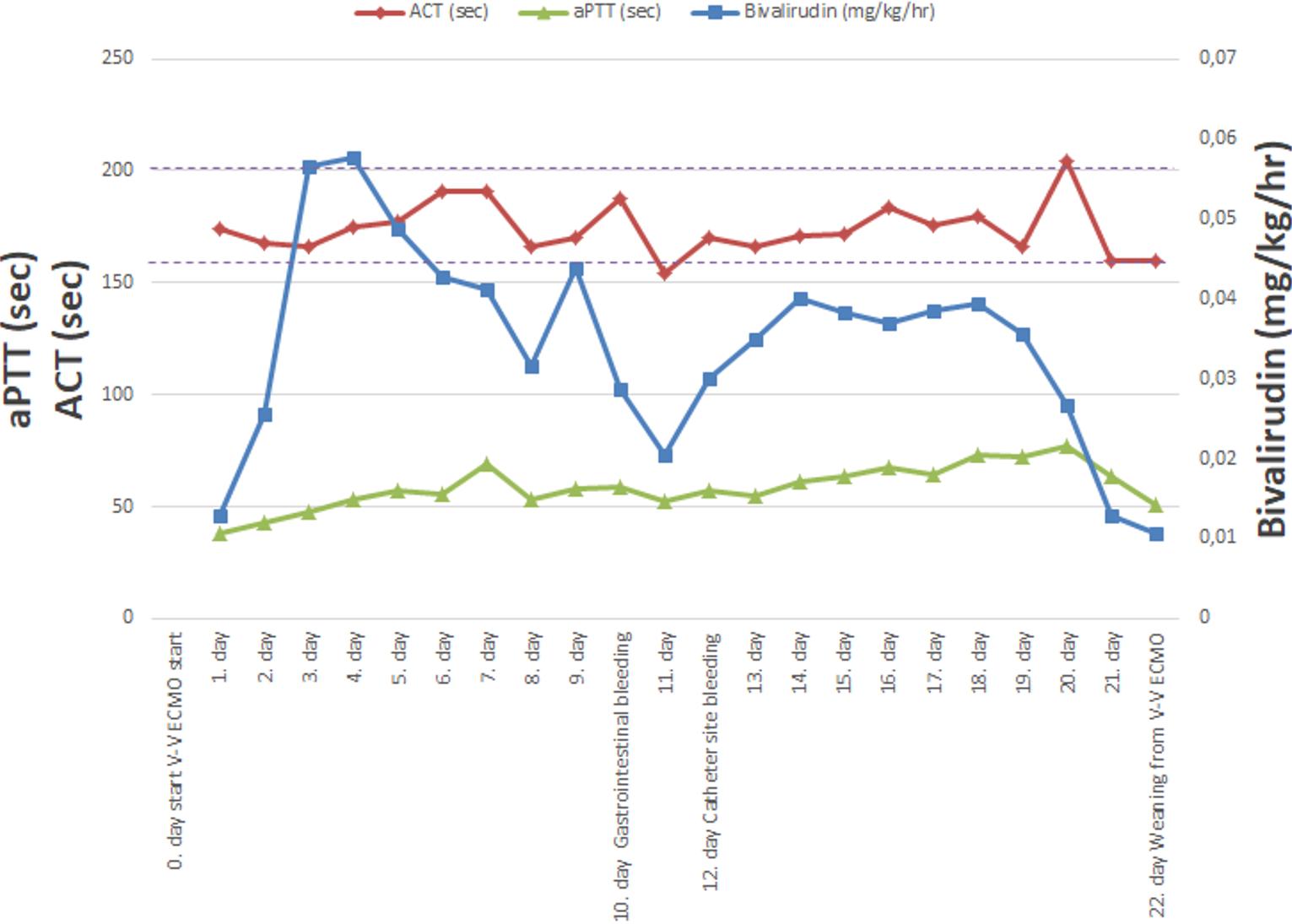
The sixth case was a 40-year-old female patient. The clinical events timeline of the case is shown in Figure 6. The daily mean bivalirudin dose administered during ECMO varied between 0.01 mg/kg/h and 0.057 mg/kg/h. Throughout ECMO, ACT was maintained within the target range, with a mean value of 174 seconds. The mean aPTT was 58 seconds and was within the target range. However, gastrointestinal bleeding occurred on day 10 while ACT and aPTT values were within the target ranges, and catheter-site bleeding was observed on day 12. Until bleeding was controlled, ACT was maintained close to a target value of 150 seconds. ECMO support was terminated on day 22. A percutaneous tracheostomy was performed on day 23. Mechanical ventilatory support was discontinued on day 32, the tracheostomy was closed on day 35, and the patient was discharged home on day 43.
Discussion
This case series presents the follow-up and outcomes of patients who received bivalirudin as an anticoagulant during ECMO support.
Over the last decade, an increasing body of evidence regarding the use of bivalirudin as an anticoagulant in ECMO has demonstrated its safety during ECMO support, and emerging data suggest that it provides a superior balance between thrombosis and hemorrhage (11). A retrospective study involving 32 pediatric ECMO patients demonstrated fewer bleeding complications with bivalirudin use (12). Current studies have reported that bivalirudin use achieves therapeutic anticoagulation targets in a shorter time, maintains patients within the therapeutic range for longer periods, and results in less variation in aPTT levels (13).
Although aPTT is recommended for monitoring anticoagulation with Direct Thrombin Inhibitors (DTIs), it has been reported that at high DTI concentrations, aPTT values may underestimate the actual anticoagulant effect. Furthermore, in patients receiving DTIs, elevated factor VIII or fibrinogen levels may lead to inaccurate aPTT results; therefore, alternative tests have been recommended. Since this situation may result in an underestimation of bleeding risk, ACT monitoring has been suggested for DTI anticoagulation management (14).
The ELSO guidelines state that ACT may be used to monitor trends in DTI anticoagulation. Experience in interpreting ACT results without adhering to a strict numerical range may enhance the utility of this test. Since each anticoagulation assay has its own advantages and disadvantages, ELSO recommends that anticoagulation efficacy should be monitored using a patient-specific protocol regardless of the anticoagulant agent used, and that both a plasma-based test (aPTT) and a whole-blood hemostatic test (ACT) should be available in clinical practice (15).
In our case series, in addition to aPTT, which is the standard test recommended for monitoring bivalirudin therapy, ACT monitoring was also performed because it was more suitable for our daily clinical practice and provided rapid results. Studies are also available in the literature in which the anticoagulant effect of bivalirudin was monitored solely using ACT values (16). In all of our cases, ACT values remained within the target range. However, mean aPTT values remained below the target range in four cases, whereas bleeding complications developed in Cases 3 and 6, whose mean aPTT values were within the target range. These findings support the notion that aPTT values may underestimate the true anticoagulant effect at high DTI concentrations (15).
The 2021 ELSO guidelines recommend measuring ACT every 1–2 hours and aPTT every 6–12 hours during ECMO anticoagulation monitoring (15). There are also studies recommending aPTT monitoring every 2–4 hours initially for bivalirudin therapy and once daily after achieving the target range (17). In our clinical practice, we followed the recommendations of the 2021 ELSO guidelines regarding the frequency of anticoagulation testing.
In Case 6, gastrointestinal bleeding and catheter-site bleeding complications were controlled by reducing the bivalirudin dose. However, in Case 3, the dose was initially reduced following the development of acute kidney injury on day 12. In the following days, as the patient required renal replacement therapy and continued to exhibit elevated ACT levels and persistent bleeding complications, the bivalirudin infusion was discontinued. It is known that the half-life of bivalirudin is prolonged in severe renal failure (18,19), and dose adjustment is recommended in patients who develop severe renal dysfunction (9,20). Therefore, the elevated ACT and aPTT values observed in this patient may be associated with acute kidney injury.
Another important complication during ECMO support is the tendency toward thrombosis. This has been reported more frequently, particularly in COVID-19 patients with a predisposition to coagulopathy, as in our case series (21,22). In our series, Case 4 developed a massive pulmonary embolism despite ACT values remaining within the target range, and Case 5 experienced an ischemic cerebrovascular event after ECMO discontinuation. However, aPTT values in both patients remained below the target range. The thrombotic complications observed may be related to this finding; however, the occurrence of bleeding complications in two patients whose aPTT values were within the target range makes this hypothesis debatable.
The incidence of thrombotic complications has been reported to be 20–30% among hospitalized COVID-19 patients (23). In the study by Arachchillage et al., thrombosis was detected in 63% of ECMO patients, with pulmonary embolism being the most common thrombotic complication, occurring in 26.9% of patients. In the same study, bleeding complications occurred in 30.9% of patients, of which 10.9% were intracranial hemorrhages (24). In the study conducted by Shaefi et al. among COVID-19 patients receiving ECMO support, thrombotic events occurred in 22.6% of cases, whereas bleeding complications were observed in 27.9% of patients. While thrombotic events were not shown to have a statistically significant effect on mortality, bleeding complications were found to be significantly associated with mortality (25).
A study comparing bivalirudin and UFH during ECMO demonstrated a lower bleeding rate in the bivalirudin group (26). In a more recent study, when thrombotic events, bleeding events, and total blood product replacement requirements were evaluated together, bivalirudin appeared to be more advantageous than UFH in patients receiving ECMO support. In that study, red blood cell and fresh frozen plasma transfusion requirements were significantly lower in the bivalirudin group compared with the UFH group. Notably, among patients in the bivalirudin group, all of whom had COVID-19, no increase in thrombotic events was observed despite the known prothrombotic tendency associated with COVID-19 (27). In another study involving patients receiving ECMO support following post-cardiotomy shock, fresh frozen plasma and platelet transfusion requirements were significantly lower in the bivalirudin group compared with the UFH group, whereas red blood cell transfusion requirements were similar between the two groups (28). Based on these literature data, bivalirudin may be considered a suitable alternative anticoagulant in patients receiving ECMO support due to COVID-19.
There is considerable variability in the reported bivalirudin dose required to achieve effective anticoagulation. In a case series by Halawi et al., the bivalirudin dose required for effective anticoagulation ranged between 0.05 and 0.1 mg/kg/h (29). Another study reported that the required bivalirudin dose varied between 0.02 and 0.5 mg/kg/h (30). In our case series, the bivalirudin dose required to achieve the target ACT ranged between 0.01 and 0.2 mg/kg/h, which was lower than that reported in the literature. Similarly, in the study by Macielak et al., bivalirudin infusion doses ranged from 0.01 to 0.05 mg/kg/h, and the target ACT was maintained between 160 and 180 seconds (31).
Conclusion
In conclusion, this case series suggests that bivalirudin may be used as an alternative anticoagulant for the prevention of thrombotic events in patients receiving V-V ECMO support for ARDS. Nevertheless, regardless of the anticoagulant agent used or the monitoring method employed, bleeding and thrombosis remain important complications during V-V ECMO therapy. Therefore, close monitoring and individualized anticoagulation management are required to optimize patient outcomes. Larger-scale studies are needed to evaluate the efficacy of bivalirudin and to determine the effectiveness of monitoring strategies, particularly in V-V ECMO patients with underlying diseases that predispose them to coagulopathy.
Ethical approval
This study has been approved by the Non-Invasive Research Ethics Committee of Sakarya University (approval date: 02.06.2022, number: 71522473-050.01.04-136950-156). Written informed consent was obtained from the participants.
Source of funding
The authors declare the study received no funding.
Conflict of interest
The authors declare that there is no conflict of interest.
References
- Klok FA, Kruip MJ, van der Meer NJ, et al. Incidence of thrombotic complications in critically ill ICU patients with COVID-19. Thromb Res. 2020;191:145-7. https://doi.org/10.1016/j.thromres.2020.04.013
- Shekar K, Badulak J, Peek G, et al. Extracorporeal life support organization coronavirus disease 2019 interim guidelines: a consensus document from an international group of interdisciplinary extracorporeal membrane oxygenation providers. ASAIO J. 2020;66:707-721. https://doi.org/10.1097/MAT.0000000000001193
- Tang N, Li D, Wang X, Sun Z. Abnormal coagulation parameters are associated with poor prognosis in patients with novel coronavirus pneumonia. J Thromb Haemost. 2020;18:844-7. https://doi.org/10.1111/jth.14768
- Bembea MM, Annich G, Rycus P, Oldenburg G, Berkowitz I, Pronovost P. Variability in anticoagulation management of patients on extracorporeal membrane oxygenation: an international survey. Pediatr Crit Care Med. 2013;14:e77-84. https://doi.org/10.1097/PCC.0b013e31827127e4
- Brogan T, Lequier L, Lorusso R, MacLaren G, Peek G, editors. Extracorporeal life support: the ELSO red book. 5th ed. Extracorporeal Life Support Organization (ELSO); 2017.
- Martel N, Lee J, Wells PS. Risk for heparin-induced thrombocytopenia with unfractionated and low-molecular-weight heparin thromboprophylaxis: a meta-analysis. Blood. 2005;106:2710-5. https://doi.org/10.1182/blood-2005-04-1546
- Tong Y, Rouzhahong J, Zhou W, et al. Comparison of bivalirudin versus heparin in adult extracorporeal membrane oxygenation anticoagulant therapy: a retrospective case-control study. Int J Artif Organs. 2023;46:162-70. https://doi.org/10.1177/03913988221148763
- Rivosecchi RM, Arakelians AR, Ryan J, et al. Comparison of anticoagulation strategies in patients requiring venovenous extracorporeal membrane oxygenation: heparin versus bivalirudin. Crit Care Med. 2021;49:1129-36. https://doi.org/10.1097/CCM.0000000000004944
- Netley J, Roy J, Greenlee J, Hart S, Todt M, Statz B. Bivalirudin anticoagulation dosing protocol for extracorporeal membrane oxygenation: a retrospective review. J Extra Corpor Technol. 2018;50:161-6.
- Esper SA, Welsby IJ, Subramaniam K, et al. Adult extracorporeal membrane oxygenation: an international survey of transfusion and anticoagulation techniques. Vox Sang. 2017;112:443-52. https://doi.org/10.1111/vox.12514
- Seelhammer TG, Rowse P, Yalamuri S. Bivalirudin for maintenance anticoagulation during venovenous extracorporeal membrane oxygenation for COVID-19. J Cardiothorac Vasc Anesth. 2021;35:1149-53. https://doi.org/10.1053/j.jvca.2020.06.059
- Hamzah M, Jarden AM, Ezetendu C, Stewart R. Evaluation of bivalirudin as an alternative to heparin for systemic anticoagulation in pediatric extracorporeal membrane oxygenation. Pediatr Crit Care Med. 2020;21:827-34. https://doi.org/10.1097/PCC.0000000000002384
- Sheridan EA, Sekela ME, Pandya KA, Schadler A, Ather A. Comparison of bivalirudin versus unfractionated heparin for anticoagulation in adult patients on extracorporeal membrane oxygenation. ASAIO J. 2022;68:920-4. https://doi.org/10.1097/MAT.0000000000001598
- Kennedy DM, Alaniz C. Apparent argatroban resistance in a patient with elevated factor VIII levels. Ann Pharmacother. 2013;47:e29. https://doi.org/10.1345/aph.1R745
- McMichael AB, Ryerson LM, Ratano D, Fan E, Faraoni D, Annich GM. 2021 ELSO adult and pediatric anticoagulation guidelines. ASAIO J. 2022;68:303-10. https://doi.org/10.1097/MAT.0000000000001652
- Ljajikj E, Zittermann A, Morshuis M, et al. Bivalirudin anticoagulation for left ventricular assist device implantation on an extracorporeal life support system in patients with heparin-induced thrombocytopenia antibodies. Interact Cardiovasc Thorac Surg. 2017;25:898-904. https://doi.org/10.1093/icvts/ivx251
- Van Cott EM, Roberts AJ, Dager WE. Laboratory monitoring of parenteral direct thrombin inhibitors. Semin Thromb Hemost. 2017;43:270-6. https://doi.org/10.1055/s-0036-1597297
- Chew DP, Bhatt DL, Kimball W, et al. Bivalirudin provides increasing benefit with decreasing renal function: a meta-analysis of randomized trials. Am J Cardiol. 2003;92:919-23. https://doi.org/10.1016/s0002-9149(03)00970-6
- Robson R. The use of bivalirudin in patients with renal impairment. J Invasive Cardiol. 2000;12 Suppl F:33F-6.
- Robson R, White H, Aylward P, Frampton C. Bivalirudin pharmacokinetics and pharmacodynamics: effect of renal function, dose, and gender. Clin Pharmacol Ther. 2002;71:433-9. https://doi.org/10.1067/mcp.2002.124522
- Badulak J, Antonini MV, Stead CM, et al. Extracorporeal membrane oxygenation for COVID-19: updated 2021 guidelines from the extracorporeal life support organization. ASAIO J. 2021;67:485-95. https://doi.org/10.1097/MAT.0000000000001422
- Roedl K, Kahn A, Jarczak D, et al. Clinical characteristics, complications and outcomes of patients with severe acute respiratory distress syndrome related to COVID-19 or influenza requiring extracorporeal membrane oxygenation-A retrospective cohort study. J Clin Med. 2021;10:5440. https://doi.org/10.3390/jcm10225440
- Middeldorp S, Coppens M, van Haaps TF, et al. Incidence of venous thromboembolism in hospitalized patients with COVID-19. J Thromb Haemost. 2020;18:1995-2002. https://doi.org/10.1111/jth.14888
- Arachchillage DJ, Rajakaruna I, Scott I, et al. Impact of major bleeding and thrombosis on 180-day survival in patients with severe COVID-19 supported with veno-venous extracorporeal membrane oxygenation in the United Kingdom: a multicentre observational study. Br J Haematol. 2022;196:566-76. https://doi.org/10.1111/bjh.17870
- Shaefi S, Brenner SK, Gupta S, et al. Extracorporeal membrane oxygenation in patients with severe respiratory failure from COVID-19. Intensive Care Med. 2021;47:208-21. https://doi.org/10.1007/s00134-020-06331-9
- Li MJ, Shi JY, Zhang JH. Bivalirudin vs. heparin in paediatric and adult patients on extracorporeal membrane oxygenation: a meta-analysis. Br J Clin Pharmacol. 2022;88:2605-16. https://doi.org/10.1111/bcp.15251
- Yılmaz R, Arslan M , Özel Bilgi D, Çukurova Z. Should I change anticoagulane in veno-venous ECMO? Turk J Anaesthesiol Reanim. 2025;53:170-176. https://doi.org/10.4274/TJAR.2025.241745
- Ranucci M, Ballotta A, Kandil H, et al. Bivalirudin-based versus conventional heparin anticoagulation for postcardiotomy extracorporeal membrane oxygenation. Crit Care. 2011;15:R275. https://doi.org/10.1186/cc10556
- Halawi H, Harris JE, Goodarzi A, et al. Use of bivalirudin after initial heparin management among adult patients on long-term venovenous extracorporeal support as a bridge to lung transplant: a case series. Pharmacotherapy. 2024;44:283-9. https://doi.org/10.1002/phar.2910
- Taylor T, Campbell CT, Kelly B. A review of bivalirudin for pediatric and adult mechanical circulatory support. Am J Cardiovasc Drugs. 2021;21:395-409. https://doi.org/10.1007/s40256-020-00450-w
- Macielak S, Burcham P, Whitson B, Abdel-Rasoul M, Rozycki A. Impact of anticoagulation strategy and agents on extracorporeal membrane oxygenation therapy. Perfusion. 2019;34:671-8. https://doi.org/10.1177/0267659119842809
Copyright and license
Copyright © 2026 The Author(s). This is an open access article distributed under the Creative Commons Attribution License (CC BY), which permits unrestricted use, distribution, and reproduction in any medium or format, provided the original work is properly cited.